
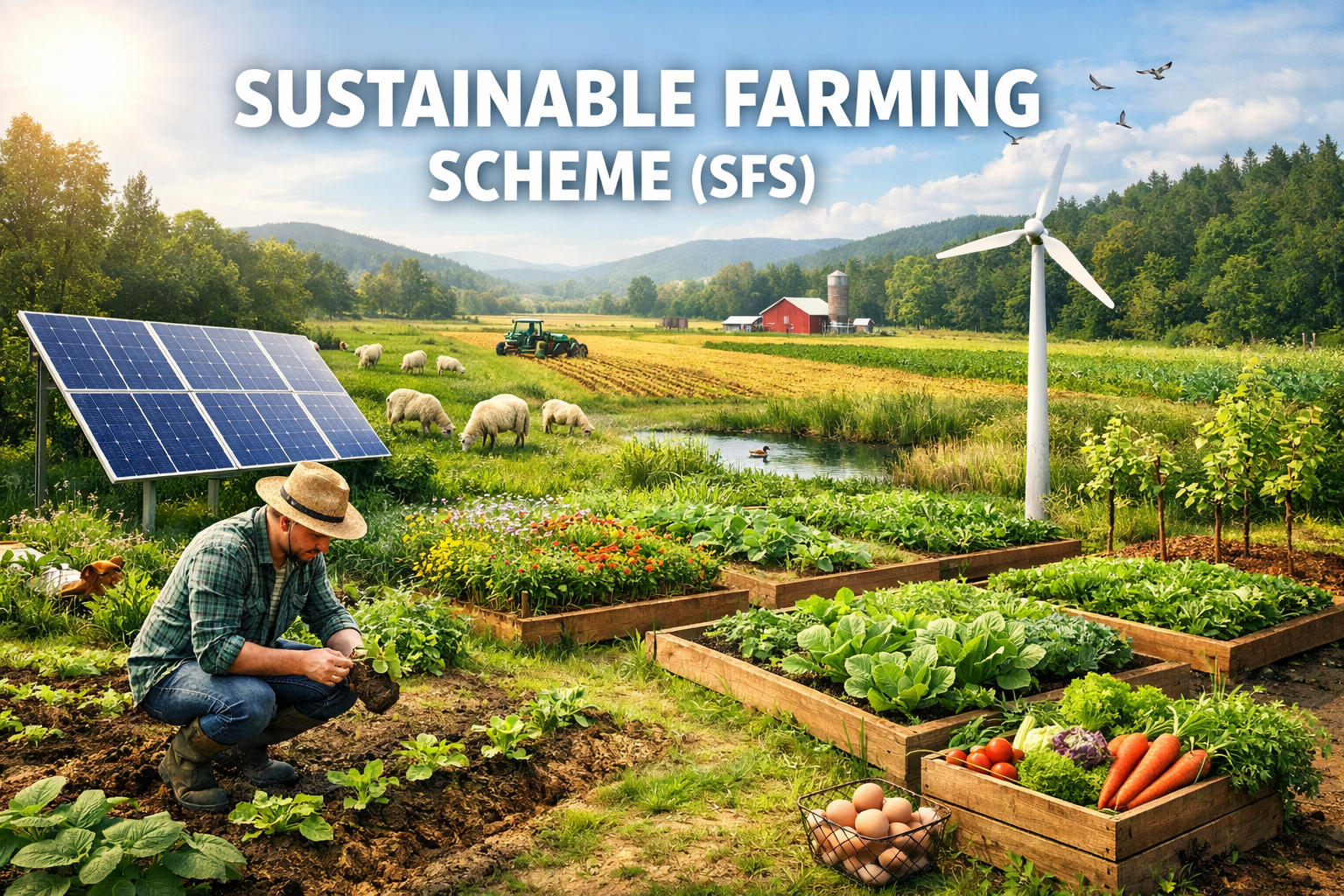
Introduction to the Sustainable Farming Incentive (SFI)
Engaging in sustainable farming practices is becoming increasingly important as the need for environmentally conscious agricultural methods grows. While the Sustainable Farming Incentive (SFI) is a national scheme managed by the government for farmers across England, understanding how to best apply its options to your specific land is key to improving farm productivity and minimising environmental impact. At Siggs and Co, we help you navigate these national guidelines within the context of the Devon landscape—from the picturesque fields to the tranquillity of areas like Exeter and Torquay—ensuring your farm thrives now and in the future.
Understanding the Sustainable Farming Incentive (SFI)
Sustainable farming is not just a buzzword; it’s a critical approach to cultivating crops and raising livestock while safeguarding the environment. But what exactly is the Sustainable Farming Incentive (SFI)? Simply put, it is the primary national scheme in England designed to pay farmers for actions that support food production while delivering environmental benefits. These actions typically address issues such as soil health, water conservation, biodiversity, and the reduction of carbon footprints. Whether you are managing coastal pastures or rolling hills, the SFI provides a framework that, when implemented correctly, contributes to maintaining the rich flora and fauna that characterise our region.
While the SFI provides a standardised set of actions, its flexible nature allows farmers to tailor their approach to local conditions. Devon’s unique climate and geography necessitate specific considerations, which is why we, at Siggs and Co, offer tailored advice to ensure you’re choosing the right path for your farm. Adopting SFI practices not only enhances environmental quality but also boosts your farm’s economic resilience through reliable, non-competitive funding.
The Benefits of the Sustainable Farming Incentive (SFI)
Why should you consider implementing SFI actions on your Devon farm? The benefits are multifaceted. First, the scheme promotes the efficient use of resources, which can lead to cost savings in the long run. By managing inputs more effectively, you can reduce waste and increase yield efficiency. Additionally, participating in SFI can improve soil fertility and structure, leading to healthier crops and higher productivity.
Furthermore, the SFI aligns with growing consumer demand for environmentally friendly and ethically produced food. This can open up new market opportunities and potentially increase profitability. In areas like Plymouth and Newton Abbot, where local produce is highly valued, engaging with the SFI can enhance your farm’s reputation and attract local buyers who prioritise sustainability.
Sustainable Farming Incentive (SFI) Practices and Techniques
Implementing the SFI involves adopting various practices that can be adapted to Devon’s agricultural landscape. Key actions include improved grassland management, which helps avoid soil depletion, and integrated pest management, which reduces reliance on chemical pesticides. Moreover, the scheme rewards techniques that help maintain soil structure and prevent erosion.
Integrating livestock into crop production (mixed farming) can also enhance soil fertility through natural fertilisation processes. Techniques like establishing herbal leys or agroforestry not only increase biodiversity but also improve land resilience against climate variations typical in coastal regions such as those near South Hams.
At Siggs and Co, our experienced consultants provide insights into these techniques, ensuring they are adapted to your specific farm conditions in Devon. Our focus is on practical, tangible advice that brings real benefits to your operation without overwhelming you with industry jargon.
Assessing Your Farm for the Sustainable Farming Incentive (SFI)
Before applying for the SFI, it’s essential to conduct a thorough assessment of your farm’s current practices and conditions. This involves evaluating soil health, water resources, and biodiversity levels, as well as assessing existing machinery and technologies. Geographic factors, particularly in Devon’s diverse landscapes like the rolling hills of Tiverton or the moorlands of Dartmoor, play a crucial role in determining which SFI actions will be most effective for your business.
Our advisors at Siggs and Co use sophisticated assessment tools and methodologies to provide a comprehensive overview of your farm’s potential. This tailored evaluation helps you understand the most effective strategies to adopt under the SFI and the likely impact on your farm’s productivity and environmental footprint.
Implementing the Sustainable Farming Incentive (SFI)
Once your farm has been assessed, the next step is to select and implement your chosen SFI actions. This often involves restructuring farming operations to integrate sustainable practices seamlessly into daily activities. Key considerations include the adoption of precision farming technologies to optimise resource use and minimise waste, crucial in an area like Devon where resource management is vital for balancing productivity with conservation.
Training and education play a pivotal role in ensuring the success of your SFI agreement. Our experts provide detailed training sessions and ongoing support to farmers and their teams, ensuring the new practices become ingrained into everyday operations. By fostering a culture of sustainability, we help farms transition smoothly, maximising the financial and environmental benefits of the SFI in Devon.
Monitoring and Evaluating Your SFI Progress
The SFI is designed to be flexible, but ongoing monitoring and evaluation are essential to ensure that your chosen actions are delivering the intended benefits. Continuous assessment allows for the adaptation of practices to suit changing conditions, whether due to seasonal variations or broader climate changes like those experienced across Devon.
Our role at Siggs and Co is to support farmers in setting up effective monitoring systems, utilising data-driven approaches to track progress and make informed decisions. By evaluating the performance of your SFI actions regularly, you ensure they remain effective and aligned with your long-term farming goals.
The Future of Sustainable Farming in Devon
The future of agriculture in Devon looks bright, with the SFI providing a stable framework for growth. As awareness grows and agricultural policy evolves, sustainable practices will become the norm across the industry. Devon’s community-focused approach and its commitment to maintaining its natural landscapes position it well to lead the way in adopting these national standards.
At Siggs and Co, we’re committed to guiding Devon farmers on this sustainable journey. Our belief in collaborative approaches ensures farmers can share insights and learn from each other’s experiences, creating a supportive network that champions innovation. By embracing the SFI, Devon farmers can continue to thrive, ensuring the land remains productive and fruitful for generations to come.
Conclusion: Choose the Right SFI Actions for Devon
Choosing the right actions within the Sustainable Farming Incentive (SFI) is vital for any farmer looking to embrace sustainability while maintaining productivity. Devon, with its unique environmental conditions, offers fertile ground for implementing these actions effectively. At Siggs and Co, we pride ourselves on our deep understanding of local conditions, from the bustling streets of Exeter to the serene coastlines of Torbay.
By selecting the right SFI path, you contribute to a healthier environment, improve farm profitability, and meet the growing demand for sustainable food products. Ready to get started? Contact us today for a consultation. Together, we can forge a sustainable path for the future of Devon’s farming community.